Discover the Course Camarguaise – a deep rooted local tradition
21 April 2026
In the Camargue, the bull is far more than an animal: it is a symbol of the region, woven into its landscapes, traditions and village life. From late spring through to the end of summer, nearly every village around La Maison d'à Côté celebrates its own fête votive, and at the heart of these celebrations is one of the Camargue’s oldest and most distinctive traditions: La Course Camarguaise.
To visitors unfamiliar with it, the word “bullring” can understandably raise concerns. Yet the Course Camarguaise is very different from the Spanish-style bullfights that many people know. Here, the bull is never harmed and never killed. In fact, the star of the spectacle is not the man, but the bull itself.
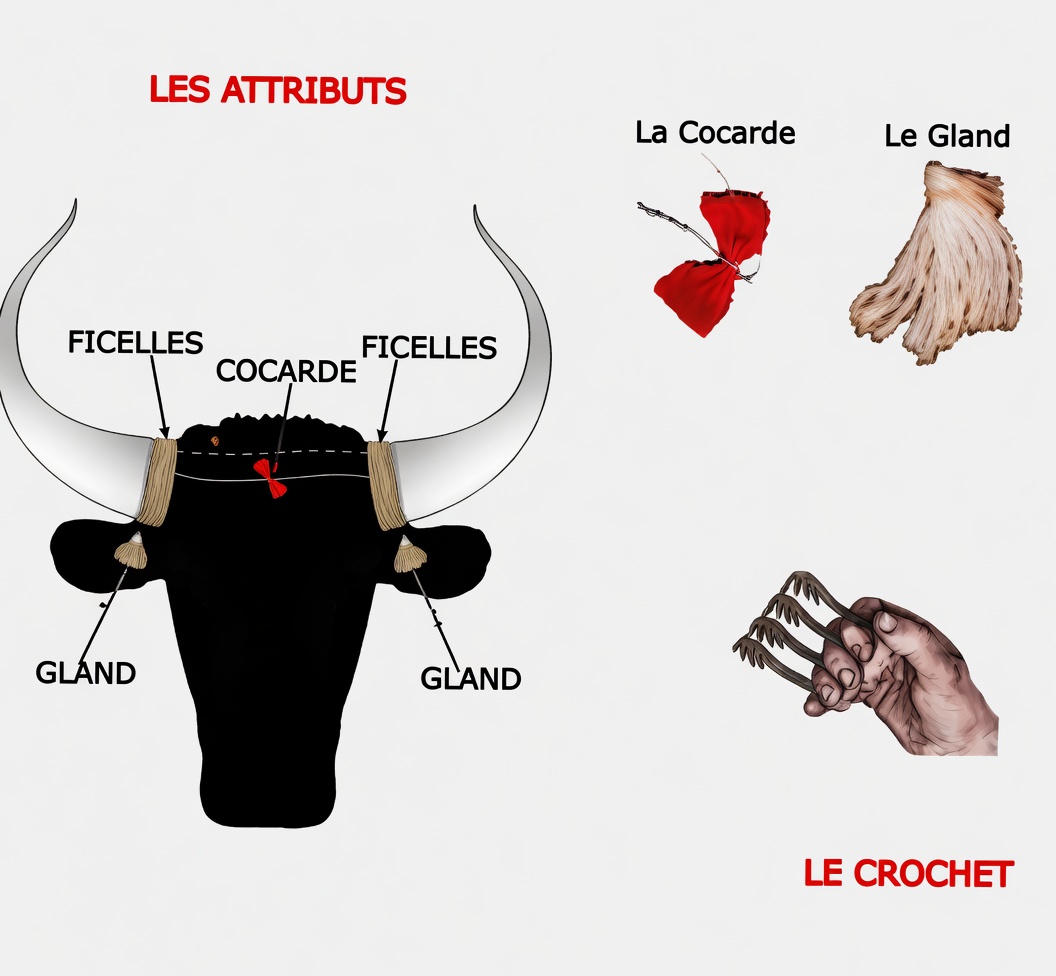
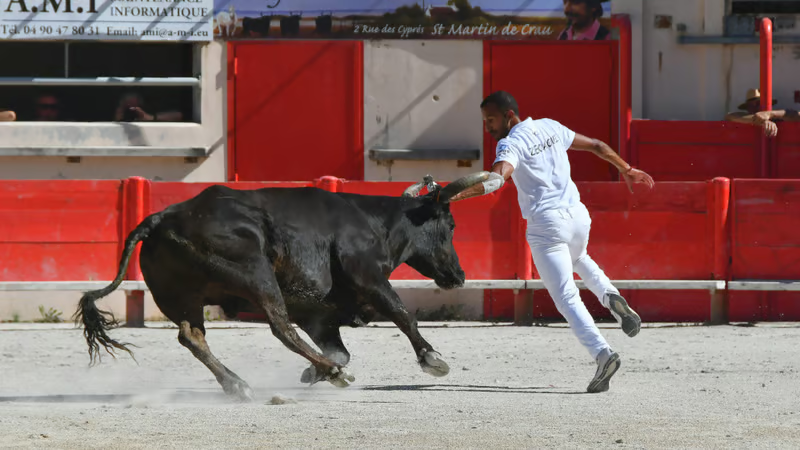
The tradition dates back several centuries and is deeply rooted in the culture of the Gard and Camargue regions. During a course camarguaise, specially trained young men, known as raseteurs, enter the arena dressed in white. Their task is to dart towards the bull and attempt to snatch small ribbons, tassels or strings attached between its horns. The bull, bred especially for this purpose, uses its speed, intelligence and agility to evade them. The best bulls become local celebrities, admired for their character and cunning. Some compete for many years and are spoken about with genuine affection and respect. A few become so famous that statues are erected in their honour in the villages where they performed.
You will quickly notice that the atmosphere is not one of hostility towards the animal, but of admiration. The crowd cheers when a raseteur succeeds, but often cheers even louder when a particularly clever or athletic bull outsmarts them. Names such as Goya, Vovo or Le Sanglier are remembered almost like sporting heroes, and their exploits are retold long after they have left the arena.
From late spring until late summer, the villages around Aimargues come alive in turn with their own fêtes. Aimargues, Le Cailar, Vauvert, Saint-Laurent-d'Aigouze, Aubais and many others all take their moment. Each village has its own programme, but the rhythm of the day is often similar, and there is a wonderful sense of community as people travel from one village to the next to join in. If Aimargues is celebrating, people will come from Le Cailar or Vauvert. A few days later, the same crowd will gather elsewhere.
The day often begins around midday with the abrivado. This is one of the most exciting and atmospheric parts of the fête. Bulls are brought in from the surrounding fields by mounted gardians – the Camargue’s famous horsemen, dressed traditionally and riding their white Camargue horses. The bulls are guided through the village streets to the arena, surrounded by the gardians. Locals and visitors line the streets to watch. Some brave souls will try to tease the bulls and dash past them, while others wisely watch from behind the barriers with a drink in hand. There is excitement, laughter and just enough unpredictability to keep everyone on edge.
In the afternoon comes the course camarguaise itself, held in the village arena. Even if you know little about the tradition, it is difficult not to be swept up by the atmosphere: the music, the crowd, the commentary and the sudden bursts of speed as the raseteurs sprint across the sand with the bull close behind. It is thrilling, skilful and unlike anything else.
Then, as the day begins to cool and the cafés fill, comes the bandido in the early evening. This is the reverse of the abrivado: the bulls are escorted back through the streets and out towards their fields once more. Once again, there is excitement and noise, with people gathering to watch or to test their courage. By now the village is in full fête mode, with music, food stalls and families filling the streets late into the evening.
Another tradition worth looking out for is the wonderfully chaotic taureau piscine. Usually held during village fêtes, this uses younger bulls or calves in a smaller arena, where an improvised swimming pool has been set up in the middle. Young people – and occasionally adults who should perhaps know better – are invited into the arena to play games, dodge the bulls and, very often, end up diving head-first into the pool to escape. It is noisy, funny and much loved by local children and teenagers.
To experience a fête votive and a course camarguaise is to see the Camargue at its most authentic. These are not performances put on for tourists, but living traditions that matter deeply to the people who live here. They are part sporting event, part village festival and part celebration of a unique way of life. If you are staying at La Maison d'à Côté between late spring and late summer, make sure you do not miss the chance to experience one.